The BriefIssue 01
Five things that fall apart in the first 30 days after discharge.
What the research says about the riskiest month in early sobriety, and what treatment centers and families can do about it.
The short version
Discharge feels like a finish line. The research says it's actually the riskiest stretch of early sobriety. Overnight, responsibility shifts from a team that saw the person every day to a family, an outpatient provider and a calendar that may not exist yet.
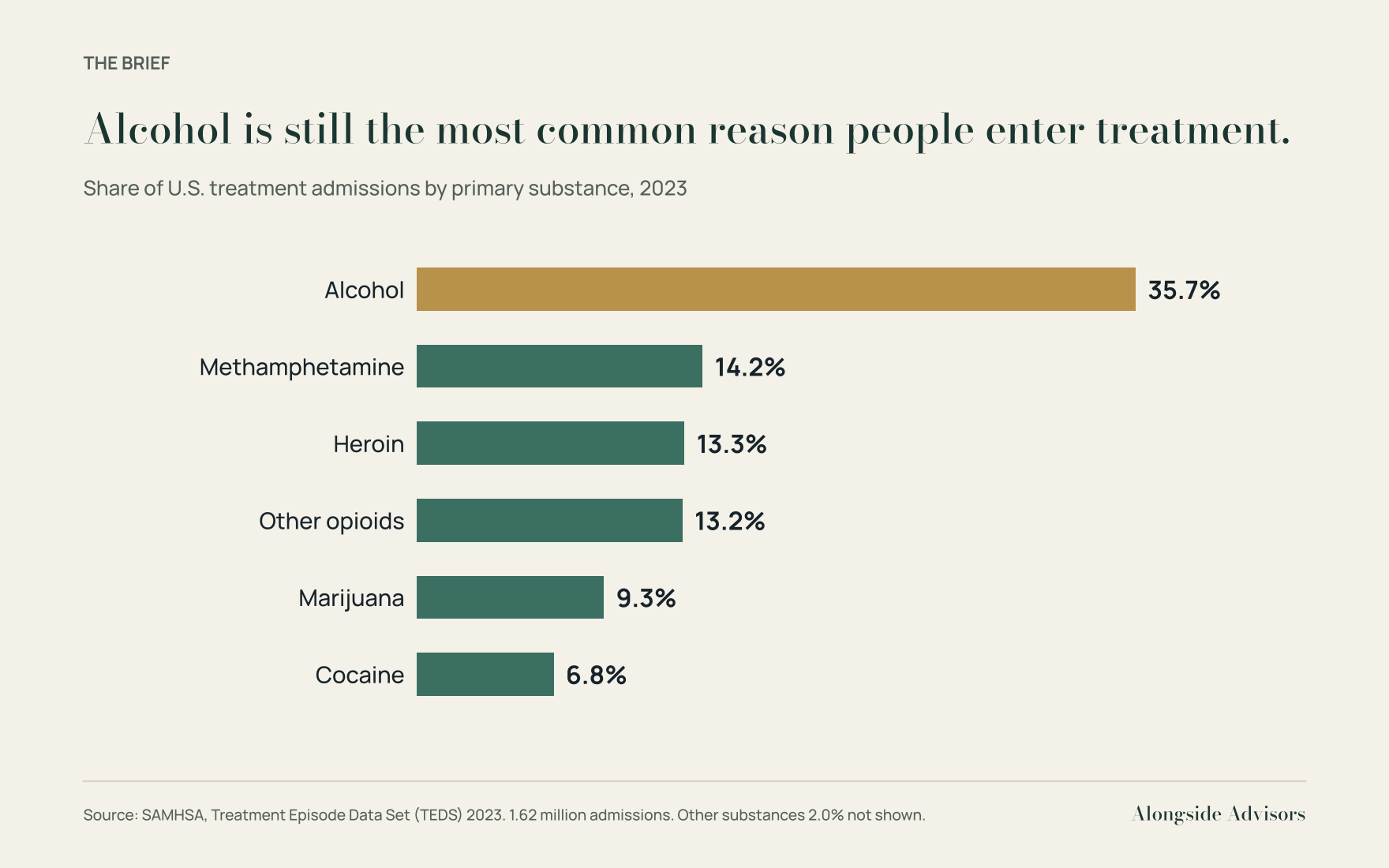
That's true whether the substance was alcohol, stimulants, opioids or something else, and alcohol is still the most common reason people enter treatment. Open each section below for the data and what helps.
The five gaps, and what to do about them
01/The handoffThe first appointment never gets booked.
Most discharge plans end with a referral. Someone still has to book the appointment, and the person still has to show up. In a 10-state Medicaid study of 90,639 residential discharges for opioid use disorder, 62.5% had no follow-up care within 7 days, and 46.9% still had none at day 30. With alcohol, the gap opens even earlier: only 7.3% of the 14.1 million U.S. adults with alcohol use disorder got any treatment at all in 2019.
What helps
- The first outpatient appointment is booked before discharge, with a date and time, and falls within 7 days of getting home.
- Someone checks afterward that the person actually went.
With AlongsideAdmission and Discharge Planning books and confirms the first appointments. Private Transport gets the client to them.
02/The bodyThe physical risks are different after treatment, and they depend on the substance.
After weeks without opioids, tolerance drops: in one BMJ study, every overdose death in the first four months came from patients who had completed detox. People who use stimulants face a related risk from a contaminated supply; in 2022, more than half of fatal synthetic opioid overdoses also involved stimulants. With alcohol, everyone tends to treat the first drink as no big deal, including the family, which is exactly why a return to drinking is easy to miss.
What helps
- Naloxone in the home wherever opioids or stimulants were involved, and every adult knows how to use it.
- Someone tells the family plainly that using again after treatment can be more dangerous than it was before.
With AlongsideFamily Advisory briefs the household before discharge. Personal Companions can be present in the first days home, when the risk is highest.
03/The scheduleIn treatment, every hour is planned. The first week home, nothing is.
A 2024 study that tracked people day by day for 30 days after residential discharge found that on days with an outpatient therapy session, the odds of using were about 68% lower. Meetings work the same way: among young adults, more 12-step attendance, and especially active involvement, was linked to more days abstinent.
What helps
- A written week-one calendar with at least one fixed commitment every day.
- A first meeting within 48 hours of getting home, picked out before discharge.
With AlongsideOngoing Coaching builds the weekly schedule with the client, and advising sessions, daily to weekly, in person or by video, keep it on track.
04/The people and the placeThey come home to the same apartment, the same friends and the same phone.
Research on adolescents found relapses most often happened under social pressure to use. Where someone lives makes one of the biggest differences: young adults who lived in a recovery residence after treatment were about 6 times more likely to stay continuously abstinent, yet only 20 to 35% did.
The home itself matters too. A bottle at the back of a cabinet, paraphernalia in a drawer or the car, an old prescription in the bathroom: any reminder of past use can set off a craving in the first days home, often before the person even realizes what happened. Families usually don’t know every place to look, and the person coming home shouldn’t have to go hunting for it on day one.
What helps
- Housing is decided before discharge, with recovery housing considered seriously for younger clients.
- The home, car and any shared spaces are cleared of alcohol, drugs, paraphernalia and unused prescriptions before they walk in the door.
- The evenings have something in them: work, school, training, a role that matters.
With AlongsidePrivate Advisory weighs housing options with the family. Ongoing Coaching covers career, finances and independent living, so the new routine has something real in it. An Advisor can also clear the home of anything tied to past use, either before discharge or together with the client when they arrive.
05/The early-warning systemMost families assume someone is keeping an eye on things. Usually nobody has actually been given that job.
In two randomized trials, people who received scheduled recovery check-ups returned to treatment more often (55% vs 37%) and got back an average of 384 days sooner. Catching a slip in week two is a very different situation from finding out about it in month four.
What helps
- One specific person is responsible for the check-ins during the first 30 days, on a set schedule.
- Everyone agrees ahead of time what happens if there's a slip: who gets called and what comes next.
With AlongsideA Lead Advisor runs the case, holds regular check-ins and coordinates with the family and the licensed clinicians on the team. If more is needed, Intervention Support is part of the same firm.
06/AgeYounger people drop out of care sooner.
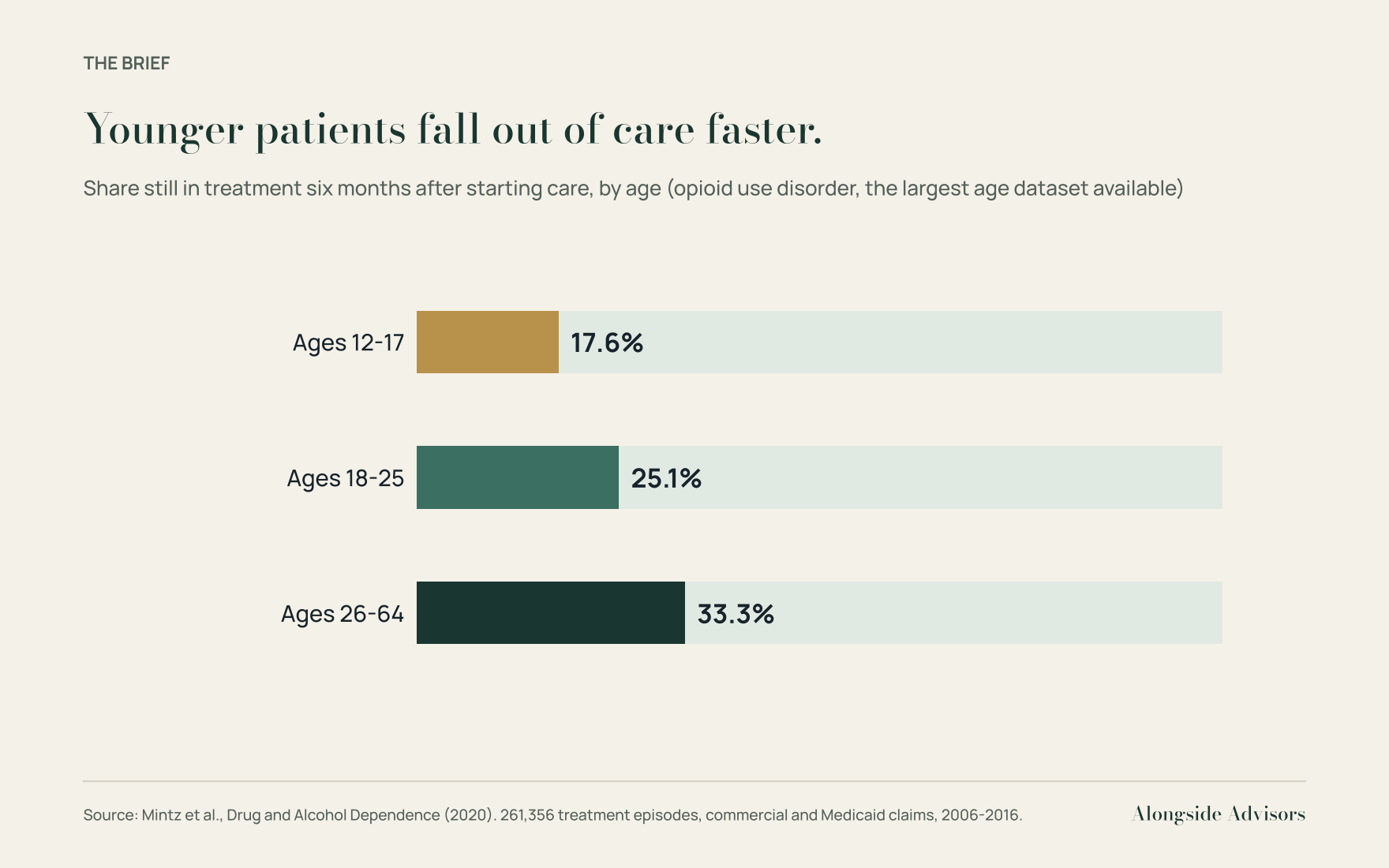
Younger patients leave treatment soonest, no matter the substance. In residential treatment, patients aged 18 to 20 were about half as likely to complete as those 50 and older, and across 88 studies of young people the pooled completion rate was 59%. The largest age dataset, from opioid treatment, shows the same pattern at six months.
For adults in their middle years, the bigger risk is that work, children and finances crowd the plan out. For older adults, it's isolation in a quieter house.
07/Does aftercare workNobody can give you one success rate, but the research is clear about what helps.
Studies define relapse differently and follow people for different lengths of time; one 2025 review found reported relapse rates ranging from 0% to 95%. What does hold up across studies is that specific supports, when they actually happen, are linked to better outcomes.
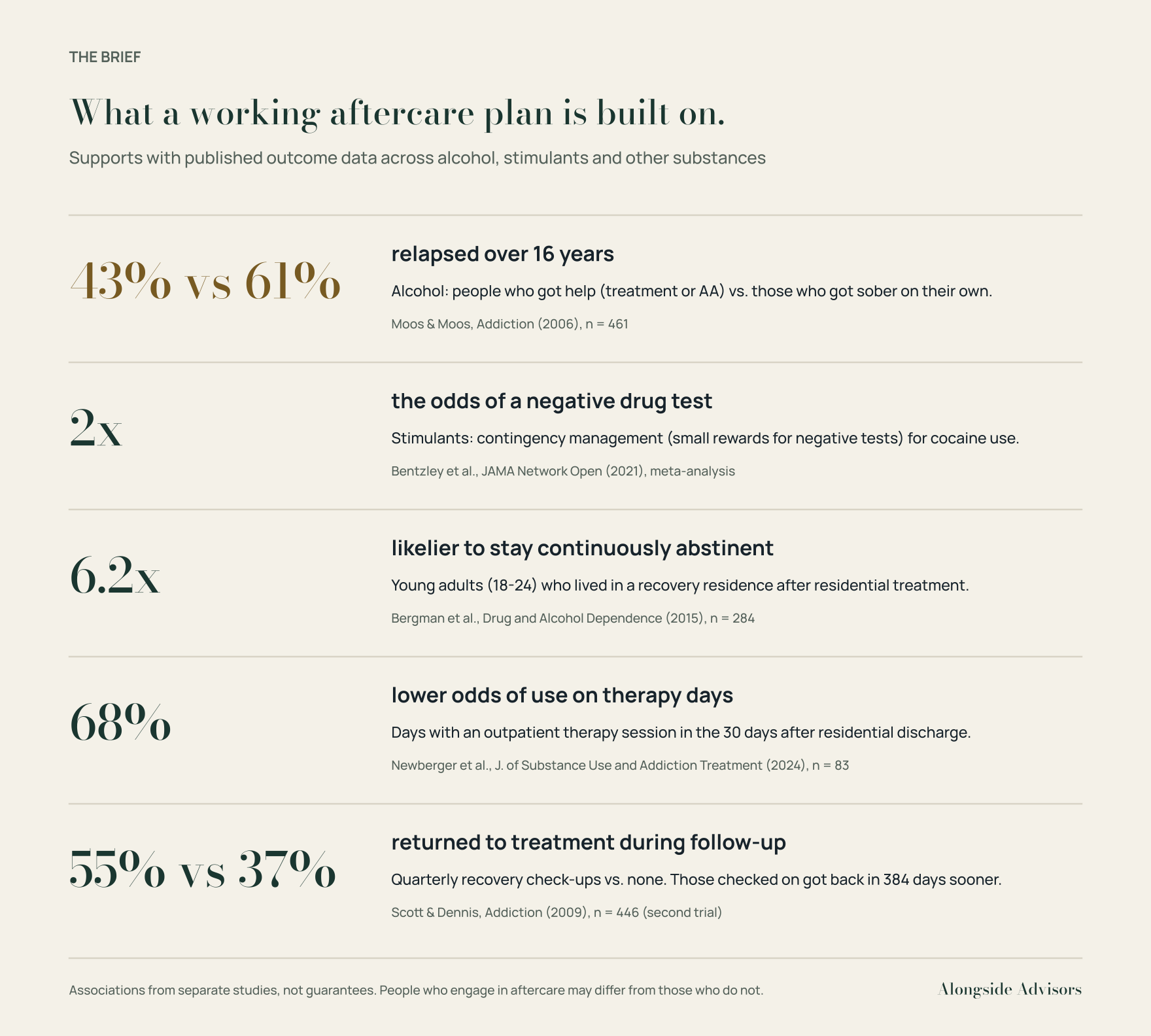
None of these does the job on its own. The plans that hold up combine several of them, and someone is responsible for making sure they actually happen.
08/For familiesWhat to watch in the first 30 days.
- Missed or rescheduled appointments, especially the first one.
- A thinning calendar and more unaccounted time.
- Old contacts and places, or new secrecy about phone and money.
- “I’ve got this” replacing the specific plan they left treatment with.
If you see these, get the person back to the plan and the people on it, quickly. If you ever suspect an overdose, use naloxone and call 911.
Treatment teams can request our 30-day handoff checklist through the referral partner form.
09/SourcesSixteen studies and data sets behind this issue.
- SAMHSA. Treatment Episode Data Set (TEDS) 2023 Annual Report (summary). Source
- Medicaid Outcomes Distributed Research Network. Outpatient follow-up after residential treatment among Medicaid enrollees in 10 states. Drug and Alcohol Dependence, 2022. Source
- Han B, et al. Use of medications for alcohol use disorder in the US. JAMA Psychiatry, 2021 (NIH summary). Source
- Strang J, et al. Loss of tolerance and overdose mortality after inpatient opiate detoxification. BMJ, 2003;326:959. Source
- CDC. Synthetic opioid and stimulant co-involved overdose deaths, United States, 2022. MMWR, 2025;74(10). Source
- Newberger NG, et al. Substance use treatment engagement during community re-entry following residential treatment. Journal of Substance Use and Addiction Treatment, 2024;164:209430. Source
- Kelly JF, Stout RL, Slaymaker V. Emerging adults’ treatment outcomes in relation to 12-step mutual-help attendance and active involvement. Drug and Alcohol Dependence, 2013 (summary). Source
- Brown SA, Vik PW, Creamer VA. Characteristics of relapse following adolescent substance abuse treatment. Addictive Behaviors, 1989;14(3):291-300. Source
- Bergman BG, et al. The effects of continuing care on emerging adult outcomes following residential addiction treatment. Drug and Alcohol Dependence, 2015 (summary). Source
- Scott CK, Dennis ML. Results from two randomized clinical trials evaluating quarterly recovery management checkups. Addiction, 2009;104(6):959-971. Source
- Mutter R, et al. Factors associated with substance use treatment completion in residential facilities. Drug and Alcohol Dependence, 2015;154:291-295 (summary). Source
- Wells M, et al. Treatment completion rates among young people accessing alcohol and other drug treatment. Drug and Alcohol Dependence, 2024;262. Source
- Mintz CM, et al. Age disparities in six-month treatment retention for opioid use disorder. Drug and Alcohol Dependence, 2020. Source
- Ware OD, et al. Risk of relapse following discharge from non-hospital residential opioid use disorder treatment: a systematic review. Substance Abuse and Rehabilitation, 2025;16. Source
- Moos RH, Moos BS. Rates and predictors of relapse after natural and treated remission from alcohol use disorders. Addiction, 2006;101(2):212-222 (summary). Source
- Bentzley BS, et al. Comparison of treatments for cocaine use disorder among adults: a systematic review and meta-analysis. JAMA Network Open, 2021 (EUDA summary). Source
Free download for families
The first 30 days at home.
A one-page checklist that turns this issue into steps: what to settle before discharge, what to watch in the first week and how to keep the plan on track through day 30. Print it, share it with everyone helping, and check items off as they happen.
PDF, one page.
Where Alongside fits
Alongside Advisors works in the gap between discharge and daily life, so the plan written in treatment is the one that actually happens. Every step forward is easier with someone alongside you.
“Advisor” is a professional title, not a license, certification or registration. Alongside Advisors provides non-clinical support; clinical care comes only from licensed professionals. This article is general information, not medical advice. If you or someone you know is in crisis, call or text 988. For help finding treatment, call the SAMHSA National Helpline at 1-800-662-4357.
A private conversation
Building fulfilled lives, alongside you.
Call or text . Confidential from the first call.
Speak with an Advisor